Unacceptable danger to bees
Several kinds of bees are attracted to lavender’s colour and flower. European experts have warned of the risks to honeybees from a fourth pesticide, after moves to ban three other chemicals. The insecticide fipronil poses a “high acute risk” to...
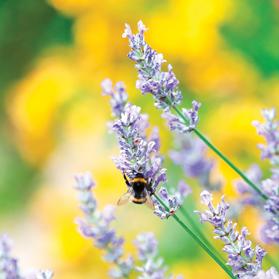 Several kinds of bees are attracted to lavender’s colour and flower.
European experts have warned of the risks to honeybees from a fourth pesticide, after moves to ban three other chemicals.
The insecticide fipronil poses a “high acute risk” to honeybees from pesticide dust when it was used to treat maise seeds, a report from the European Food Safety Authority (EFSA) has concluded.
But the agency said it could not establish the impact of drifting dust when using the chemical on other crop seeds such as sunflowers, or whether honeybees were harmed by nectar or pollen from treated crops.
The risk from the use of fipronil on vegetables was considered to be low.
The report comes after a previous review by EFSA concluded that three ‘neonicotinoid’ insecticides should not be used on crops that are attractive to honeybees because they could be exposed to harm through pollen or nectar.
We need a bee action plan now to address all threats to bees
The review into neonicotinoids led the European Commission to go ahead with an EU-wide ban on their use, in the face of opposition from the UK Government and a number of other countries, in order to protect bee health.
The two-year ban on their use on plants and cereals that are attractive to bees is set to be in place by December this year.
Fipronil is used as an insecticide on a wide range of agricultural crops and also for ant and cockroach control.
Following the report by EFSA, Friends of the Earth senior nature campaigner Paul de Zylva said: “Once again, a widely-used chemical that was previously thought safe is found to be risking the health of our bees.
“This is further evidence that testing is not rigorous enough. How many more products used on our crops and in gardens are putting bees in danger?
“We need a bee action plan now to address all threats to bees.”