Nothing healthy about a tan
Does a tan really make you look healthier and is there such a thing as a healthy glow? Charmaine Gauci, director at the Health Promotion and Disease Prevention Directorate, has the less-than-pleasant answer. Spring brings with it long, beautiful days...
Does a tan really make you look healthier and is there such a thing as a healthy glow? Charmaine Gauci, director at the Health Promotion and Disease Prevention Directorate, has the less-than-pleasant answer.
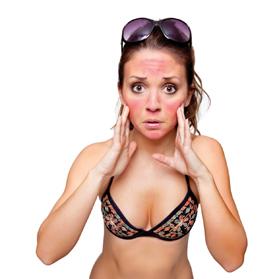
Spring brings with it long, beautiful days as the temperature starts to get warmer and warmer. As we start wearing shorter sleeves, some of us prefer to have a tan as we think it looks nicer.
Some may even have the impression that we look healthier if we have a tan.
So we see people flogging to the beaches to get some colour. However, in reality, does a tan make you look healthier? Does it make you look more beautiful?
The truth is that there is no such thing as a healthy tan! When ultraviolet radiation from the sun reaches the skin, some is reflected away from the surface. But the remainder is scattered into the tissues just beneath the skin’s surface.
In reality, a tan is a protective mechanism put up by our bodies and is a sign that the skin has been damaged and has attempted to protect itself
A fraction of this radiation is absorbed by the skin’s cells. Once UV rays penetrate the skin, they work as a catalyst for the increased production of melanin by melanocytes, which are present in the skin.
The more time exposed to UV rays, the more melanin released. The greater amount of melanin released, the darker the tan becomes.
Melanin formation is actually a shield against further damage from UV radiation. The darkening provides some protection against sunburn. It is estimated that a dark tan on white skin offers a sun protection factor of between two and four.
Although melanin stops your skin burning, it does not prevent the harmful effects of UV rays, such as skin cancer. So, in reality, a tan is a protective mechanism put up by our bodies and is a sign that the skin has been damaged and has attempted to protect itself.
As more exposure goes on, sun rays kill most of the skin cells in the upper skin layer and damage the rest of the cells. This is what happens in sunburn.
As a mild form, sunburn consists of a reddening of the skin, which happens after exposures of eight and 24 hours.
However, strong sunburn may cause the skin to blister and peel, which is not
only painful, but also leaves the very white and new skin underneath unprotected and even more prone to UV damage. Not at all a sign of healthy skin!
Expression lines or wrinkles, whatever one would like to call them, are part of the ageing process.
Many spend hundreds of euros every year to ‘save’ a few wrinkles and yet people still get exposed to the sun, thinking they will look more beautiful.
The fact is that sun exposure promotes skin ageing due to a combination of several factors. Sun causes collagen to break down at a faster rate than the normal process.
As the collagen fibres break down, there is an accumulation of abnormal elastin, which leads to the accumulation of enzymes that further break down collagen.
The formation of disorganised collagen fibres is known as solar scars. When the skin repeats this imperfect rebuilding process over and over, wrinkles develop. Sun rays also stimulate cell proliferation in the outer layer of the skin and cause it to thicken, while another effect is the localised overproduction of melanin, resulting in dark patches, or liver spots.
Furthermore, the sun’s rays dry out the skin, making it coarse and leathery.
UV radiation also causes the walls of blood vessels to become thinner, leading to bruising with only minor trauma in sun-exposed areas.
A further effect of the sun is the development of telangiectasia, which are tiny blood vessels in the skin, especially on the face.
Apart from the cosmetic effects on the skin, prolonged exposure to solar UV radiation may result in skin cancer.
There is very strong evidence that each of the three main types of skin cancer (basal cell carcinoma, squamous cell carcinoma and melanoma) is caused by sun exposure. Research shows that as many as 90 per cent of skin cancers are due to UV radiation.
So adopting simple precautions to protect your skin from the harmful effects of the sun’s UV rays will make all the difference to your looks and health.
■ For more information, contact the Health Promotion and Disease Prevention Directorate on 2326 6000.