Genius who created bouncing bomb
Engineer Barnes Wallis's efforts also aided then British Prime Minister Winston Churchill in negotiations with the US and the Soviet Union. Photo: PA Described by his family as a man of peace and not war, the brilliant and often eccentric engineer...
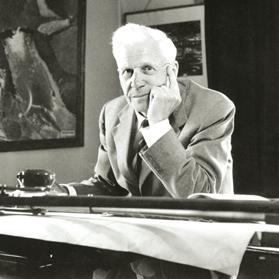 Engineer Barnes Wallis's efforts also aided then British Prime Minister Winston Churchill in negotiations with the US and the Soviet Union. Photo: PA
Described by his family as a man of peace and not war, the brilliant and often eccentric engineer Barnes Wallis became synonymous with designing the bomb that almost brought Germany to its knees during World War II.
His efforts brought extensive flooding and devastation to dams in the Ruhr but also aided then Prime Minister Winston Churchill in negotiations with the US and the Soviet Union.
His much-celebrated genius, for which he was later knighted, also came with some particular quirks: it is said he used to eat three spoonfuls of porridge and eight prunes for breakfast and always ate cold rice pudding when he got home.
He lived until the grand age of 92, having been born in Ripley, Derbyshire, on September 26, 1887.
By the end of his successful education he had decided that he wanted to be an engineer. Unable to afford university once he had finished school, he started an indentured apprenticeship at the Thames Engineering Works at Blackheath.
He worked on many projects but in 1908 transferred to JS Whites shipyard at Cowes working on Naval destroyers. While there Wallis blossomed and was promoted to the design office. In 1912 the young Hartley Blyth Pratt joined the firm from armament firm Vickers and he and Wallis quickly became great friends.
Wallis’s work with boats had given him a sound grasp of fluid dynamics and when airship design again became fashionable, Pratt was called back to Vickers.
It was only a few months before he called Wallis and arranged for him to join the massive organisation of Vickers as his assistant.
When World War II broke out, Wallis was Assistant Chief Designer at Vickers Armstrong Aviation section at Weybridge.
Here, independently of any Air Ministry requirement, he spent time investigating how the energy sources of the axis powers (Germany and Italy) might be reduced or eliminated.
Specialist publications provided him with all the necessary background information on the German dams and he formed the opinion that knocking out the water reserves of the Ruhr would curtail steel production severely.
Wallis proceeded to experiment and explore the possibilities and limitations that might surround attacking German dams. What emerged was the ‘bouncing bomb’ and Dambusters raid.
After the war, he never stopped designing and inventing.He carried on until he was forced to retire, at the age of 83, and even then, he did not cease. He is reported to have had ideas for swing-wing planes, such as the Swallow, hypersonic aircraft and other modifications and improvements for the air industry.
He also invented the non-misting, glassless mirror which is made out of unbreakable and non-flammable polyester.
Wallis received a knighthood for his work and service to his country in 1968.
He was also presented with a £10,000 government award which he gave to his old school and made an Honorary Fellow of the Royal Aeronautical Society.
Wallis died on October 30, 1979, aged 92.