Mintoff attempted to ‘blackmail’ the US
Col Muammar Gaddafi (left) and then Prime Minister Dom Mintoff leaving Castille in November 1973. Photo: Frank Attard Former Prime Minister Dom Mintoff had tried to “blackmail” the US into offering Malta financial assistance through a private letter...
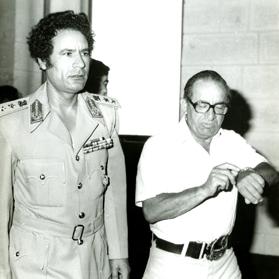 Col Muammar Gaddafi (left) and then Prime Minister Dom Mintoff leaving Castille in November 1973. Photo: Frank Attard
Former Prime Minister Dom Mintoff had tried to “blackmail” the US into offering Malta financial assistance through a private letter sent to then-Secretary of State Henry Kissinger, leaked embassy cables have shown.
The July 1976 letter to Dr Kissinger intimated that, unless European states, backed by the US, stuck up for Malta’s neutrality and economy, he would be forced to announce a pact with Colonel Muammar Gaddafi’s Libya before the 1977 election.
“Blackmail is a harsh word, but it seems to fit in this case,” a US embassy official wrote in his report to Washington on July 7, witheringly noting how Mr Mintoff “apparently assumes that we and our Nato allies will be terrified at the prospect of a Maltese mutual defence agreement with Col Gaddafi”.
No reason why we should respond to his letter in such a way as to help. We believe his bluff should be called
The 40-year-old cables are among the 1.7 million pieces of classified correspondence released earlier this month by whistleblower website Wikileaks.
Dr Kissinger’s reply, sent later that month, diplomatically acknowledged the importance of Malta preparing for life without British troops, but added that the US was “not now in a position to comment substantively” on Mr Mintoff’s suggestions.
Behind the scenes, US diplomatic readings of Mr Mintoff’s decision to reach out to Dr Kissinger were somewhat more withering.
In a first cable – sent to Washington on July 7 and reliant solely on Attorney General Edgar Mizzi’s characterisation of the letter – embassy officials said the letter was proof that Nationalist Party taunts were beginning to get under Mr Mintoff’s skin.
“He desperately wants to show the electorate that Malta’s future is assured after the British depart,” they wrote.
Two weeks later, and having read the letter first-hand, US embassy officials fine-tuned their assessment.
A genuinely neutral post-1979 Malta was an idea “worth discussing”, they wrote, but it would be “wildly impractical” to expect that to happen before the 1977 general election.
“Since he [Mintoff] is no fool, he must know this as well,” they said, arguing that the letter was therefore an attempt to weasel an assurance, “however vague”, of western support.
Mr Mintoff’s warning about Malta being forced to turn to Libya for assistance was in all likelihood bluff, they went on to say.
Col Gaddafi might be on good terms with Mr Mintoff, but he was “both feared and distrusted” by the Maltese, who also “disliked” Libyans in general.
Noting that Mr Mintoff’s government had voted against all 25 issues the US had pushed most within the United Nations, the embassy told Washington it could see “no reason why we should respond to his letter in such a way as to help... We believe his bluff should be called”.
Mr Mintoff clearly attached some importance to getting a US reply, going as far as pressuring his German counterpart, Chancellor Willy Brandt, into putting pen to paper.
“Please excuse me that I trouble you with the following matter,” Mr Brandt wrote in a letter to Dr Kissinger, “Dom Mintoff has written to me to tell me that he attaches great importance to receiving an answer to the letter that he wrote to you.”