Of vice and men
Mark Camilleri drinks to old memories at the Suez Canal Bar.
 Photos by Chris Sant Fournier.
If you walk down St Paul’s Street in Cospicua, you arrive at a metaphorical fork in the road. You can either huff and puff on and arrive in Senglea, or else you can stop for a drink at the Suez Canal Bar.
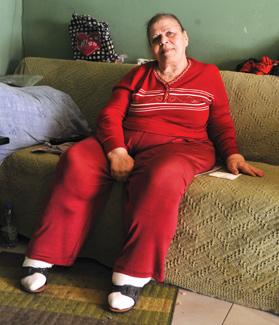
The bar is owned by Ġużeppi Buttigieg, a man who forms part of a dying breed of bar and restaurant owners who catered for sailors and dockyard workers for years on end. Nowadays, 75-year-old Ġużeppi lives in the bar with his partner Polly Saliba, 72. The Suez Canal Bar has been Ġużeppi’s passion and love for most of his life – it’s in this bar that he has experienced all the joy and sorrow that life brings with it. Nowadays, the bar struggles to turn a profit – with the bar mostly empty, Ġużeppi and Polly have ample time to rest.
Helping Ġużeppi and Polly to run the bar is their adopted son Max Muscat, who at the age of 17 already sparks with the same business acumen of his adoptive father. Ġużeppi and Polly aren’t married but have been together since 1967 and, together with Max, they form a family which is united by love and great respect for each other.
That brawl was serious. Bottles and glasses were flying and I had to crouch down behind the bar to avoid getting hit
“Times have changed,” Ġużeppi tells me, like any other old man would. And times have indeed changed. Ġużeppi’s bar has seen better days when the dockyard was still a major industry by itself – in those days, the Three Cities were home to dozens of bars, each having their own unique characteristics. Every day, hundreds of thirsty sailors, dockyard workers and patrons would descend on the bars and drink them dry.
Ġużeppi claims that his bar is even older than himself. The bar was flattened during World War II along with most of the buildings in the Three Cities and was rebuilt in 1947 with war damage funds. In the same year that the bar was rebuilt, Ġużeppi’s uncle bought the bar only to hand it over to Ġużeppi in 1956 when Ġużeppi was only 18 years old. Brimming with youthful enthusiasm and a great urge to make some money, Ġużeppi started serving food and turned the place into a restaurant and bar.
Ġużeppi doesn’t know the exact date when the bar was opened for the first time, although he does remember how its name came about. He says that this was coined by sailors from Port Said, Egypt, who thought that since the bar was long and narrow, it resembled the Suez Canal itself.
Eventually, the bar became a favourite with Egyptian sailors. Back then it used to be profitable to have a good reputation among a particular group of sailors – however, sailors can also be unsavoury drunks. Ġużeppi says that the most violent brawl he has ever witnessed involved 25 Egyptian sailors.
“That brawl was serious. Bottles and glasses were flying and I had to crouch down behind the bar to avoid getting hit. As far as I could tell they were fighting over some cannabis.”
In letters and words, these film-like episodes can sound novel and charming – in reality, they weren’t. Drunken fights in drinking holes could be deadly. On the night of April 3, 1978, the Suez Canal was the scene of a murder which was nothing else but an irrational act committed under the effect of excessive drink.
Polly, who was present at the scene of the murder, still remembers what happened in graphic detail. She recounts how a sailor from Honduras called Jorge Adalberto Prince intervened in a fight between an Algerian and a Maltese to calm them off. The end result was unexpected. As Prince and the Algerian wore an identical suit, bought from the same shop downtown, in the confusion the Maltese mistook Prince for the Algerian and Prince suffered a deadly blow. The 18-year old sailor was killed by mistake.
Ġużeppi claims that the fight tarnished the reputation of the bar and as a result local patrons started avoiding the Suez Canal – no one likes going to bars where people get killed. But back in the day, the area was also ripe with vice, including drugs. Ġużeppi recounts how sailors used to bring drugs with them, sometimes even selling them to Maltese people. Cannabis was a favourite.
Nowadays, the couple’s problems are limited to old age and health issues. Gone are the days when Polly and Ġużeppi had to dodge blows and flying glasses or feed 70 men in one sitting. Today, the bar looks derelict and empty, but its walls still echo with the stories of thousands of men long gone.