The fast changing landscape of retailing
Some local retailers are making a genuine effort to enhance their bricks-and-mortar delivery channels by introducing e-commerce options for their customers. A few decades ago a bus trip to Valletta was the most affordable and sought-after retail...
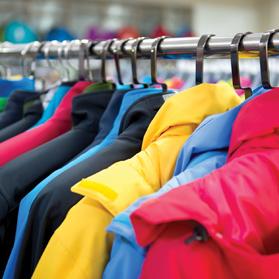 Some local retailers are making a genuine effort to enhance their bricks-and-mortar delivery channels by introducing e-commerce options for their customers.
A few decades ago a bus trip to Valletta was the most affordable and sought-after retail therapy experience for most of us. Republic and Merchant Streets were the mecca for shoppers who sought some excitement away from our quiet towns and villages that mostly had retail outlets in the form of grocers, spartan pharmacies, bakeries and ironmongers.
Things changed in the 1970s when a number of mini markets cropped up, offering shoppers the unique experience of picking their groceries from attractively stacked shelves. At the same time, shops in Valletta started to import branded clothes and shoes and a trip to Valletta was still a must for most young people on Saturdays. Whole families also flocked to the capital whenever sales offering attractive discounts were held.
The landscape of retail business continued to evolve and in the 1990s we saw a number of supermarkets and department stores cropping up mainly in Sliema and other sites away from Valletta. City retail outlets smartened their appearance. The amount of premium that was often paid to acquire a retail outlet, especially in Republic Street, was mind boggling.
The shake-up in local retailing is still not complete
No wonder retailers in Valletta now feel nostalgic about the good old days when the tills kept ringing as customers crowded their pokey shops. Profit margins were substantial as competition was limited and the customers’ demand for good quality goods was strong.
This phenomenon was not unlike that experienced in other countries where high street retail outlets once dominated town and city life. As more people owned their own transport, mega stores started to open up away from city centres. They offered an almost endless variety of goods at prices that were more affordable than those appearing on the labels of high street shops. Soon, town centre retail shops were squeezed out of the market and their outlets either remained vacant for months if not years or were transformed into take-away food outlets offering comfort food to town residents.
The last decade saw the latest major change in retail business as the internet, that is now available to most households, literally transformed the market for retail services from local to global. It started gradually when companies like Amazon started to sell books and CDs online.
Prices were reasonable and delivery was reliable and relatively fast. Other online sellers like eBay increased the opportunities for buying a variety of things as delivery companies offered fast courier services at very reasonable costs.
A personal experience has convinced me that online shopping is not only here to stay, but it will continue to replace more traditional ways of shopping. I recently needed to buy a spare part for a rather old family car. The price of this part from the local agent was prohibitive. When I went to a local scrap yard I was told that they had it but that I had to remove it from an old car lying in the scrap yard. I was quoted a price that was, in my opinion, still way too high for a second-hand part that came with no guarantee.
An hour’s search on the internet provided me with a far more practical solution. I found an online car parts retailer in the US which quoted a price that was identical to the one offered by the local scrap yard operator, but the part they sent me was new and the price included the cost of sending it by courier to Malta. I know what I will do next time I need a spare part for any one of the appliances I use.
It is a shame that no statistics are published about the market share of online sales of retail goods. In the US, seven per cent of retail sales are made online. E-commerce becomes a much bigger slice of the pie during the Christmas holidays that traditionally are the peak season for retailers.
Maltese shoppers, especially the younger generation, are as tech savvy as any UK or US shopper. The growth in e-commerce in Malta will continue, especially as payment systems are becoming safer and more reliable thanks to systems like PayPal.
Some local retailers are making a genuine effort to enhance their bricks-and-mortar delivery channels by introducing e-commerce options for their customers. I fear that progress is still slow as I find most local online sites limited and unattractive. So the shake-up in local retailing is still not complete.
johncassarwhite@yahoo.com