Classical CD reviews
Wagner: Excerpts from Tannhäuser, Lohengrin and Götterdämmerung. Kirsten Flagstad, soprano; Vienna Phil-harmonic and Philharmonia Orchestras conducted by Wilhelm Furtwängler – Naxos 8.111348 (65 minutes). Although the music on this disc is all...

Wagner: Excerpts from Tannhäuser, Lohengrin and Götterdämmerung. Kirsten Flagstad, soprano; Vienna Phil-harmonic and Philharmonia Orchestras conducted by Wilhelm Furtwängler – Naxos 8.111348 (65 minutes).
Although the music on this disc is all Wagner’s, these recordings focus more on Wilhelm Furtwängler’s conducting prowess than on the master’s creations. Born in 1886, Furtwängler, inspired by a particular passion for Beethoven, was to become one of the fore-most interpreters of German and Austrian composers.
He was also an accomplished composer. His works include several expansive chamber pieces and three symphonies of Brucknerian proportions. Indeed, Bruckner was very close to Furtwängler’s heart, and he conducted many performances of the former’s symphonies.
When Furtwängler died on November 30, 1954, his memory was only kept alive through a relatively small discography, but as of late his recorded legacy has been swelled by many releases of exhumed concert performances.
This instalment, dedicated to Wagner, one of Furtwängler’s heroes, is special; it draws from tapings made during the last year of his life (except the Tannhäuser overture and Brünnhilde’s Immolation Scene, which date from 1952), where the conductor en-sures maximum expression and a dramatic intensity that allow the music to move forward in a wholly organic way.
Norwegian soprano Kirsten Flagstad and Furtwängler were close musical and personal friends, and this issue is enriched by her masterly interpretation of Brünn-hilde’s famous tone, unforced strength, accurate intonation and peerless ability to spin a long and precise performance of mesmerising proportions.
Sound quality is more than acceptable, despite the wear and tear of some 60 years. This disc is a fitting tribute to a legendary conductor.
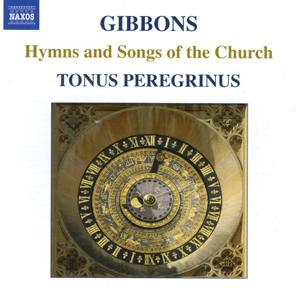
Gibbons: Hymnes and Songs of the Church. Several soloists; Antony Pitts, director; John Byfield, organ – Naxos 8.557681 (72 minutes).
Orlando Gibbons (1583-1625) achieved a fine reputation as a composer of church music and besides being a member of the Chapel Royal, was also the principal organist at Westminster Abbey, where his agility on the instrument earned him the reputation of “the best finger of that age”.
This recording focuses on some of Gibbons’s best church music and encapsulates the complete so-called Hymnes and Songs of the Church, eight sets of songs written for Catholic liturgical festivities.
Each set has a specific emotion or virtue attached to it and the music’s description of joy, love, sacrifice, lamentation, triumph, unity, faith and hope is consistently uplifting.
Written in 1623, these pieces were frequently sung and played both at home and in church, and these new recordings by Alexandre L’Estrange (countertenor) and Antony Pitts (director) have not only made them more singable but also more accessible to those unfamiliar with this style of music. Performances are clean and perfectly balanced, and the superb sound quality further enhances the beauty of the music.
Richard Strauss: Five Piano Pieces, Op. 3; Piano Sonata in B Minor, Op. 5; Moods and Fancies, Op. 9. Stefan Veselka, piano – Naxos 8.557713 (68 minutes).
Born in 1864 to an excellent horn player and his second wife, a member of a rich brewing family, Richard Strauss embodies a remarkable extension to the work of Liszt and Wagner. He had his first piano lessons at the age of four, and by the age of six he had already written his first piece, the Schneider Polka for piano.
Before he left school in 1882 Strauss already had some success as a composer, but it was only in 1885 that his talents started to make their mark when he was appointed assistant conductor to Hans von Bülow with the Meiningen Orchestra.
In 1886 Strauss left this post to embark in earnest on a series of mesmerising tone poems that occupied him until the end of the century, including Aus Italien, Don Juan, Macbeth, Death and Transfiguration, Till Eulenspiegel, Also Sprach Zarathustra, Ein Heldenleben and Don Quixote. They are full of dar-ing orchestration and vivid musical imagery that leaves one breathless.
With the turn of the century he turned his attention to opera, but his first stage work, Guntram was a disaster, and it almost destroyed him. It was only the 1905 Salome that launched afresh his operatic career, a work that was to lead to further successes such as Elektra (1909), Der Rosenkavalier (1911) and Capriccio (1942), his last work for the stage.
Strauss’s output also includes a considerable number of songs, and some piano works, three of which are on this disc. Written during his final years at school and university, the pieces recorded on this issue have a mainly conservative harmonic style, reflecting the obvious influence of Mendelssohn, Schumann and Brahms, and compared to his later creations they make a truly serene and enjoyable listening experience.
These CDs were submitted for review by D’Amato Record Shop of 98/99, St John Street, Valletta.