Weight loss obsession that makes many sick
The Maltese may be among the fattest in Europe but another reality is lurking in the shadows – nearly five per cent of all women aged between 16 and 50 have suffered from an eating disorder at some point in their lives. In men, the figure is 1.2 per...
The Maltese may be among the fattest in Europe but another reality is lurking in the shadows – nearly five per cent of all women aged between 16 and 50 have suffered from an eating disorder at some point in their lives.
The government will budget an average €1 million a year to offer therapeutic, in-care services at the new residential home
In men, the figure is 1.2 per cent.
The statistics emerge from recent research carried out by the National Statistics Office and the Directorate for Health Information and Research.
In all, nearly one per cent of the population in this age group is suffering from one or more of the three kinds of eating disorder – anorexia, bulimia or binge eating – and two per cent have been afflicted sometime in the past.
The figures roughly tally with the incidence of eating disorders in the rest of Europe.
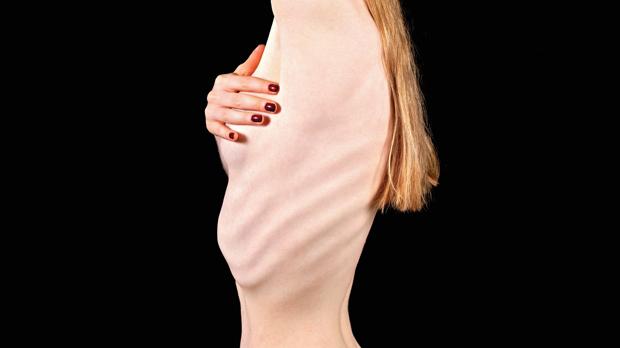 Anorexia sufferers try to keep their weight as low as possible.
An eating disorder is when someone makes unhealthy choices about food arising out of an excessive focus on their weight and shape.
In anorexia, sufferers try to keep their weight as low as possible by starving themselves or exercising too much. Those who suffer from bulimia try to control their weight by binge eating – the compulsion to overeat – and then deliberately being sick or using laxatives.
More than half of the Maltese who have an eating disorder – 57 per cent –binge eat while 34 per cent are anorexic and 13 per cent are bulimic.
The figures also show that about a third of people with eating disorders start young, between the ages of 15 and 19.
The survey was commissioned by the Malta Community Chest Fund to get a clearer picture of the situation as it embarked on its latest project: a residential home aimed at offering a holistic approach to treating anorexia, bulimia and obesity.
President George Abela said the former Sisters Quarters in Mtarfa were transferred to the MCCF, which will provide €2 million to restore and refurbish the premises.
The government, on the other hand, will be budgeting an average €1 million a year to offer all the therapeutic in-care services.
Dr Abela said the residence would have 33 beds: 19 dedicated to obesity and 14 to anorexia and bulimia.
“There will be a separation between the residents because their needs are different.
“The possibility of offering an outpatients service to the obesity clients is being studied.
“In-house treatment will be between four and six months long,”he explained.
A special board made up of government representatives and the MCCF has been set up to evaluate tenders for the works on the building, which Dr Abela hopes will be completed this time next year.
Prime Minister Lawrence Gonzi said more still had to be done in the health services.
“We all need to adopt the health sector as our baby, even the Church. This would crown our social values. The MCCF is making a very strong statement.
“Malta’s generosity is sowing a seed that will bear fruit in the years to come,” he added.
A living experience
Joanne Ellul Lanfranco suffered from anorexia for five years. She used to lie to her family and friends and did not go out for meals or social events “as I wanted to run away from food. I isolated myself completely”.
A psychiatrist then shocked her mother when he declared that unless Ms Ellul Lanfranco received treatment she would be burying her daughter.
“Then I became fixated on healthy eating and, despite increasing the food intake and portions, I could not increase my weight.”
Ms Ellul Lanfranco has rediscovered her love for food and has always wanted to see holistic treatment services being offered in Malta.
In fact, she had suggested this to the Prime Minister as her Be Prime Minister for a Day suggestion.
“Now I feel free and want to live and enjoy life again,” she added.