‘Little done’ on road safety three years on
Anniversary of cyclist Cliff Micallef’s death, which devastated his wife and sons
Shirley Micallef, whose husband was killed in a hit-and-run accident while cycling along the Coast Road three years ago today, is insisting more needs to be done to make roads safer for cyclists.
You do not kill one person, you break down a family
“Three years have passed and nothing much has been done. We need proper cycle lanes… the ones along the Coast Road are all fading out.
“We need to educate cyclists and motorists on how to behave on the road. A campaign would help… and we need to focus on driving home the message: No drinking and driving,” the 45-year-old mother-of-three insists.
More than anything, she says, people need to be aware that a simple reckless act can devastate an entire family.
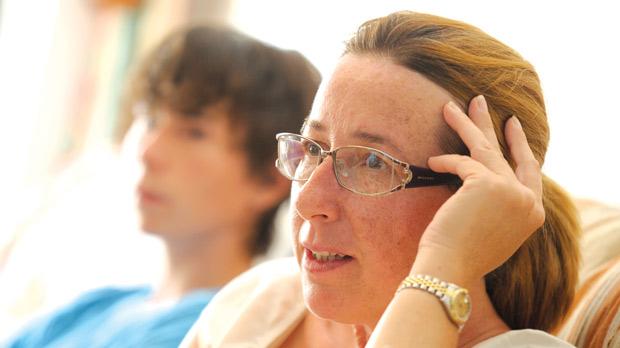 Shirley Micallef and her son Zak. Photo: Matthew Mirabelli
Her 15-year-old son Zak, who inherited a passion for cycling from his father, agrees that many motorists do not know how to act around cyclists.
“They don’t realise that a bicycle is a vehicle as well and deserves respect,” he says, adding: “Cycling is a good sport but the lack of safety holds people back.”
His 45-year-old father died on July 30, 2009, after he was hit by a car in Baħar iċ-Ċagħaq, minutes into his morning exercise routine.
He had been training for the LifeCycle Challenge to raise funds for the Renal Unit at Mater Dei Hospital. A 21-year-old man, Anthony Taljana, was charged with running him over while under the influence of alcohol and his case is still pending.
His death had spurred a barrage of criticism from cyclists who called on the authorities to improve bicycle lanes, but the situation has remained the same.
The Bicycle Advocacy Group recently reported an average of about 240 near-misses per 1,000 kilometres on Maltese roads in the first quarter of this year.
This month, cyclist Emmanuel Inguanez suffered a broken pelvis after a hit-and-run incident in St Paul’s Bay when he was knocked off his bicycle by a small commercial vehicle.
A few days later Nanette Farrugia was riding down the Coast Road when she was hit by an Arriva bendy bus that flung her on to the pavement.
Ms Micallef finds it sad that, since her husband’s death, roads have remained unsafe for cyclists and not much has changed. In contrast, her family’s life was turned upside down.
Her sons ended up without a father and she is struggling to cope with expenses such as bills and her boys’ education.
“We’re shattered. I always say to myself: I’m at the theatre, in the gallery and I’m just watching, I don’t live. I breathe, I have three boys and have to raise them. But inside me, everything has ceased,” she says.
Throughout all this, she adds, “the coldest people are the insurance people”. Her family was being made to spend years in court fighting for compensation when they needed the money now.
“We are victims. Something should be done to alleviate this burden off victims,”she says.
Apart from the material problems, seeing her sons miss their father is heartbreaking.
Zak adds he and his brothers – Max, 18, and Jon, 11 – talk about him a lot.
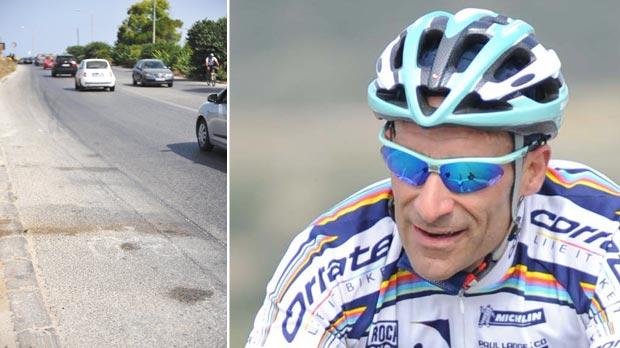 Faded bicycle lanes are in desperate need of maintenance. Photo: Chris Sant Fournier. Right: Cliff Micallef. Photo: Rene Rossignaud.
All three boys still love cycling although it took Zak a while to get back on his bicycle after the accident.
“At first my mummy was protecting us… she didn’t like it that we cycled… but after a few weeks we started going out again. Out of all my friends, I’m scared most,” he admits.
Unlike her boys, Ms Micallef has never touched a bicycle since her husband’s death. Before the accident the whole family would cycle, even during holidays abroad.
“I would have Jon with me, Clifford would have Zak and Max was older so he could cycle,” she remembers with a smile that vanishes as her mind brings her back to the present.
“These are all consequences of silly, crazy acts. If only one thinks of what can happen… Your life changes totally. It’s not only the absence, but what comes with it. It’s like a tsunami.
“The government can do a lot as regards road safety. However, it boils down to the individual. Think about the repercussions – you do not kill one person, you break down a family,” she says.