Fears grow as Aids deaths rise in Asia and Europe
The details of a panel of the Aids Memorial Quilt which is on display at the National Cathedral in Washington, DC. Deaths from HIV/Aids are rising in parts of Asia and central Europe and the global response must accelerate, experts said after the...
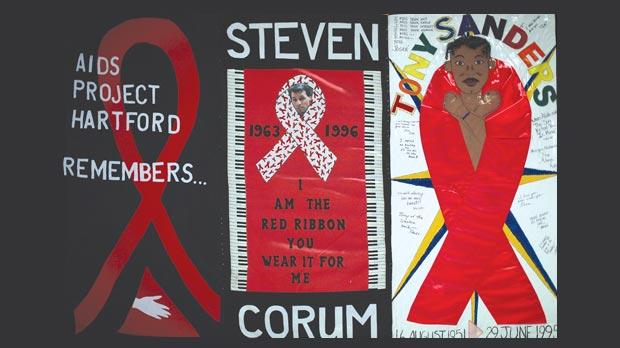 The details of a panel of the Aids Memorial Quilt which is on display at the National Cathedral in Washington, DC.
Deaths from HIV/Aids are rising in parts of Asia and central Europe and the global response must accelerate, experts said after the release of a major report on the world Aids epidemic.
...access to treatment is not universal. We still have a problem with access in Asia, Eastern Europe and Central Asia so we need to redouble the effort
The epicentre of the crisis remains in Africa, where great strides have been made in domestic funding and treatment, but where 1.2 million people died of Aids-related causes last year, the bulk of the 1.5 million deaths worldwide.
The 300,000 deaths in south and east Asia last year are the largest outside of Africa, and mounting infections and deaths in Eastern Europe and central Asia show no sign of slowing down, said the report by UNAIDS.
One of the chief accomplishments in the world response is that now more than eight million people − a record number in low- and middle-income countries − are getting treated for HIV, making up 54 per cent of people in need.
The availability of antiretroviral drugs in low- and middle-income nations grew by more than 20 per cent from 2010 to 2011, said the report issued ahead of the International Aids Conference to take place in Washington from Sunday to Friday.
The rise in drug coverage in 2011 was accompanied by a dramatic 31 per cent drop in deaths from Aids-related causes in sub-Saharan Africa compared to the peak of the epidemic in 2005.
“But access to treatment is not universal. We still have a problem with access in Asia, in Eastern Europe, Central Asia so we need to redouble the effort,” said UNAIDS executive director Michel Sidibe.
Those parts of the world are seeing deaths and new infections rise “in a very alarming way”, he said.
In Russia, newly reported HIV cases increased from nearly 40,000 in 2005 to more than 62,000 in 2010, said the report, a trend that was mirrored in Kyrgyzstan, Tajikistan and Uzbekistan.
Across Eastern Europe and central Asia, an estimated 90,000 people died of Aids last year, six times higher than in 2001.
“There is no sign that the epidemics in Eastern Europe and Central Asia are slowing down,” said the UNAIDS report, noting that people who inject drugs, sex workers and their clients, and men who have sex with men are at highest risk.
While death trends are relatively stable in Asia, the rate of HIV’s spread has slowed somewhat over the past decade, down to 360,000 new cases last year compared to 440,000 in 2001.
“This reflects slowing HIV incidence in the larger epidemics, with seven countries accounting for more than 90 per cent of people living with HIV: China, India, Indonesia, Malaysia, Myanmar, Thailand and Vietnam,” said the report.
New HIV cases are on the rise in Afghanistan and the Philippines while they have declined by half in India since 2000.
Even in the US, which provides nearly half of the world’s money for Aids response, the annual number of new infections has remained steady at around 50,000 in recent years and is particularly concentrated among gays and African-Americans.
More governments have stepped up funding to help those suffering within their own borders, with 81 countries increasing their domestic investments for Aids by more than 50 per cent between 2006 and 2011.
Overall, low- and middle- income countries invested $8.6 billion in responding to HIV/Aids last year, an increase of 11 per cent over 2010. International funding remained flat at 2008 levels of $8.2 billion.
Total worldwide investment in HIV was $16.8 billion last year, an 11 per cent rise from 2010, but still far short of the $22-24 billion needed by 2015, the report said.
US Aids Coordinator Eric Goosby said reducing the impact of Aids worldwide is a “priority” for the US government and called for nations to step up their involvement in local Aids programmes.
“If we do not aggressively move to work with our colleagues in country to expand their capacity to manage, oversee, monitor and evaluate these programmes, regardless of resources we will fail,” he said.
Reacting to the UNAIDS report, Doctors Without Borders also made a plea for faster pace in treatment and a boost in worldwide funding.
“Globally, we’re finally past the half-way mark with HIV treatment, but that still means almost one in two people don’t have access to the medicines they need to stay alive,” said Eric Goemaere, the group’s senior HIV/TB adviser in southern Africa.
“If we’re going to reach all people who need treatment, we have to double the pace of scale-up and double the funds.”
Other highlights of the UNAIDS report included the drop in the costs of antiretrovirals, from $10,000 per person in 2000 to less than $100 per person in 2011 for the least expensive WHO-recommended regimen.
Fewer children were infected with HIV in 2011 − about 330,000 worldwide − down 24 per cent from 2009.
But a staggering 3.4 million children under 15 were living with HIV last year, 91 per cent of them in sub-Saharan Africa.
The statistics were alarming for young women, too, with HIV named as the leading cause of death in women of reproductive age globally and those aged 15-24 facing infection rates that are double those of males the same age.
An estimated 1.2 million women and girls were newly infected with HIV last year, according to the report.