Telling stories
Transmedia may use brave new words, but it still takes us back to our storytelling roots, says Edward Duca.
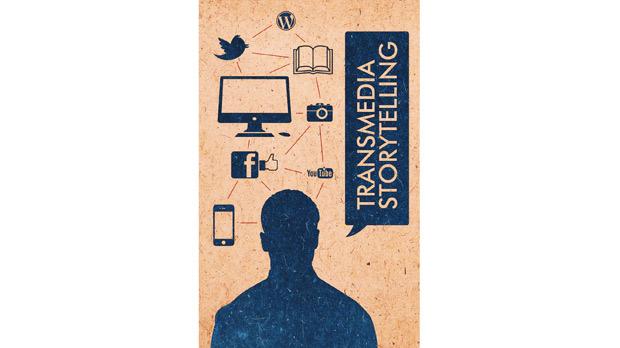
This year, Evenings on Campus is organising a transmedia storytelling competition, which will see participants writing a story using various media platforms.
Transmedia is a storytelling process created by using more than one medium. This does not mean simply presenting the story on different platforms – rather, each medium is used to communicate different elements of the story in the most engaging way possible. Thus, it becomes an immersive experience that takes the audience into a fictional world which is made as real as possible through the different forms of media and through the different storylines.
The winner or winning team of the transmedia storytelling competition will have the possibility to redevelop and strengthen their narrative with a seasoned professional and their team. This mentorship programme will last for a month, during which a clear roll-out and financing strategy will be delineated and the story expanded. The winning team will be thoroughly prepared to take their narrative to the international market place.
Projects submitted for the transmedia storytelling competition will be judged on creativity, style, language and innovation in the use of the different media selected. A documentary will be filmed in the run-up to the event which will include participation from the teams involved. During a dedicated event of Evenings on Campus, the documentary and snippets from various projects will be shown, and the winner or winning team announced.
Are you a reader, writer or both?
Both. I’m an extensive reader mostly of popular science books, science fiction and classics. I also try to read some good fiction to learn from storytelling masters.
I’m also a science writer by profession – this involves reading complex scientific data, research articles, or interviews, and then finding the story within all the information and writing it all up in a way most people can understand.
I also started writing fantasy adventure stories for my friends to play in Dungeons & Dragons – consider it an interactive Tolkienesque
What inspired you to organise the transmedia project?
The transmedia project wasn’t my inspiration but Patricia Camilleri’s. Patricia – who is a member of the University of Malta transmedia competition organisation and consultancy team – was inspired by a TV programme which highlighted this approach of telling stories. She then got us, hooked onto the idea.
At the same time, we heard that Jean Pierre Magro was organising the first transmedia seminar in Malta. I attended this conference with my colleague and was blown away. The examples used, the potential, and the rich engaging storytelling experience were phenomenal. We wanted to give an opportunity for people locally to make such ideas happen and to start generating a culture of transmedia storytelling in Malta.
Transmedia can be quite a technical challenge because it might need different skill sets to make the story. Someone might be a good writer, the other musician, or know how to make a good-looking socially integrated blog. So we will be encouraging participants to form groups to create these stories. The prize has been tailored with groups in mind.
The transmedia project is about telling a story using various platforms. Are words not enough to tell a story?
Stories all tend to fit into specific structures. What makes a good story different from a bad one is how it is told. Transmedia can help a storywriter tell their story in the best way possible. Visuals, illustrations, music, and games can all help a story unfold.
The best example, I remember Jean Pierre Magro saying, is Star Wars. There are games, books, films, and more, all drawing different stories from the Star Wars Universe. Multiple authors have fleshed out the story of that world, giving lots of material for other writers to draw inspiration from.
When human beings first started telling stories, writing had not been invented – instead, people danced, acted, sung and spoke their words. Transmedia has been with us for a long time – perhaps transmedia could be seen as going back to our roots in storytelling.
By using games, one can also bleed the online world into the real world. Foursquare is probably the best example for mobile apps, and the experience will become more integrated with the new Google Goggles adding a virtual layer of information to the world around us.
Games have also been used to promote movies like Batman: The Dark Knight, where the beginning of the movie was actually the end of a game that had been running for months before the release. A website had been setup, were fans could login and take part in a series of clues all across America. The clues were in bakeries, public street signs, and online, and they needed the fan community to come together to solve the puzzle. The prize? Free tickets to see a special screening of the movie or a poster of the new movie (way before the film came out – example taken from Jean Pierre Magro). This level of interaction is impossible in any other way than transmedia.
Does using various media to tell a story allow enough space for the reader to imagine, interpret and fill in the blanks?
Storytelling should use various media to tell a story, not fill in the blanks. Storytelling is a learnt art and its roots do not change from one medium to another – some basics remain the same.
By using Facebook, Twitter, blogs, photography, music (YouTube), games, podcasts and so on, the only limitation becomes your imagination and how to make your stories come to life. After all, this isn’t about cutting edge technology, but about telling a good story.
What are the aims of the mentorship programme?
This competition is being organised by Evenings on Campus, in collaboration with the University of Malta, Koperattiva Kulturali Universitarja, and The Factory Media Group. The competition is for everyone. You don’t need to be a University of Malta student to apply – you just need a good story and a good way to tell it.
The submission will be treated by The Factory Media group to bring it up to international market. Then the story needs to be pitched and sold to this market. We have set this high bar of achievement to help motivate local authors to look beyond our shores – one approach to help continue professionalising local storytellers.
What, in your opinion, has to date limited local authors from accessing the international market place?
While being a science writer, I have never written any form of fiction that I attempted to sell abroad, so I am not an expert to speak about this issue.
Still, I imagine the hardest thing would be building contacts with people abroad while still living in Malta. A writer really needs to travel attend book festivals, conferences and so on to get out there.
Translation is one of the more effective ways for Maltese literature to be published beyond our shores. Does the transmedia project offer a viable alternative?
For the Transmedia project, the stories still need to be told in English – since the aim is to try and bring them to the international market place, the writer has to keep this audience in mind.
However, I still think that a translation service of some form is sorely needed for Maltese literature. An author shouldn’t have to decide between writing for local audiences, without the possibility of bringing that story to audiences outside of Malta. It is good to think beyond our shores – we have some very talented Maltese writers who deserve better international exposure.
Submissions for the Transmedia Storytelling Competition are to be handed in by noon on July 15 at Room 133, Administration Building, University of Malta. For more information visit the Evenings on Campus Facebook page.