Mifsud Bonnici censure motion - Franco Debono protests as government tries to block opposition amendment calling for minister's resignation
There was controversy in the House of Representatives today when the government objected to an attempt by the opposition to move an amendment to its censure motion against Home Affairs Minister Carm Mifsud Bonnici, calling for the minister's...
There was controversy in the House of Representatives today when the government objected to an attempt by the opposition to move an amendment to its censure motion against Home Affairs Minister Carm Mifsud Bonnici, calling for the minister's resignation.
Opposition Home Affairs spokesman Michael Falzon was about to move his amendment at the end of a two-and-half hour speech in the first of nine sittings allocated to the debate.
But Foreign Minister Tonio Borg objected and requested a ruling by the Speaker, saying such an amendment could not be accepted under House rules since it changed the nature of the motion.
Franco Debono (PN) sounding angry, said that in normal parliaments, for holders of public office who respected themselves and their office, a motion of censure was so serious that there should be no difference between censure and resignation.
Dr Debono then went on to criticise the 'shameful' way how parliament had been run in the past months, criticising Dr Borg and the prime minister.
The Acting Speaker, Censu Galea stopped him, saying he would not accept further comments other than on the amendment. At one time he warned Dr Debono that he would suspend him from the House if he continued.
Dr Debono, however, continued to protest about the state of parliament.
Mr Galea said he would rule in another sitting on whether the Opposition motion could be accepted.
The original motion was moved on December 5 by Jose' Herrera, Opposition spokesman for justice, and Dr Falzon. A huge question mark hangs on whether it will be supported by Nationalist MP Franco Debono, who has been strongly critical of the minister's performance. Dr Debono had presented his own motion on justice and home affairs in November.
The motion covers various areas of the ministry (which has since been split) including legal assistance to people under interrogation, slow action to strike off or amend laws which the Constitutional Court found to have violated human rights or were unconstitutional; the proper separation of the executive and the judiciary; court delays; failure to enact the Whistleblower Act;
The poor state of the National Laboratory, where forensic tests are made; the need to reform legal aid; police statements going missing; failure to tackle problems at the Family Court; delays in the implementation of the Reparative Justice Act; shortcomings at the prisons including drug trafficking; a lack of security and the need to improve conditions at Detention Centres; granting of trade union rights to the police and a lack of security in places of entertainment.
See motion in full at http://www.parlament.mt/motion11_280
The vote on the motion will be taken at the end of the month. Nine sittings have been allocated for the debate, of which five will be used by the government.
At the opening of the debate, Dr Falzon denied this motion was a case of political opportunism. He said the motion was drafted before the summer last year but was not moved at the time because both he and the minister were indisposed. The motive behind the motion was unacceptable inaction and nonchalance in the sectors of justice and home affairs.
CIVIL PROTECTION - Missing generator on sale on the internet
Starting his remarks with the situation at the Civil Protection Department, Dr Falzon criticised squandering of public funds on overtime by people who did not turn up for work, particularly in Gozo, and a communications system which remained unused. Recently, he said, a generator went missing, and then it turned up on Maltapark for sale for €7,000. And yet it seemed that everything was being covered up.
He said that former MIA workers transferred to the CPD were still in 'no-man's land with regard to pending payments.
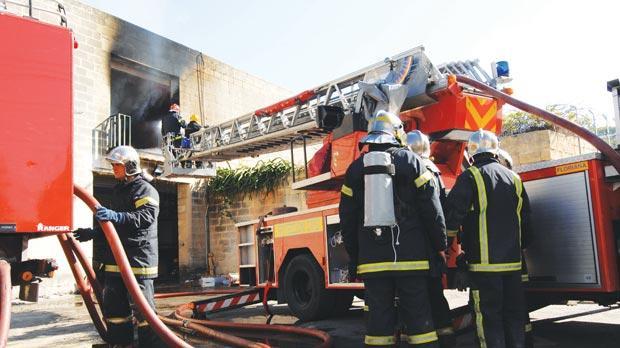
It was also scandalous, he said, how the fire-fighting facility had ended up in the hands of a private company. This scandal was allowed even though the CPD director was against what had happened and refused to sign any document. The same applied to a director in the lands department. The situation now, Dr Falzon said, was that expensive breathing apparatus had to be removed from the site and stored in inadequate conditions, simply to accommodate a particular contractor.
It was also shameful how a €200,000 tower ladder was damaged during filming and instead of being repaired, it was being cannibalised for another vehicle.
THE POLICE - Longstanding problems remain unresolved
Turning to the police, Dr Falzon said the biggest problem in the Force was demotivation, with an exodus of hundreds of policemen from all ranks without anyone doing anything to stem the flow by seeing what was causing them to leave.
Dr Falzon said the Prosecution Unit had been dismantled, and it was therefore no surprise that mistakes were made in charge sheets.
He said there was discrimination in part time jobs. Some were allowed to work part-time and others suffered disciplinary action if they did. One policeman had been involved in a collision during a part-time job. He threatened whoever was involved, a police report was filed, and no action was taken. There was also discrimination, Dr Falzon, is the way some people were given cushy jobs such as strategy and planning with official car and all.
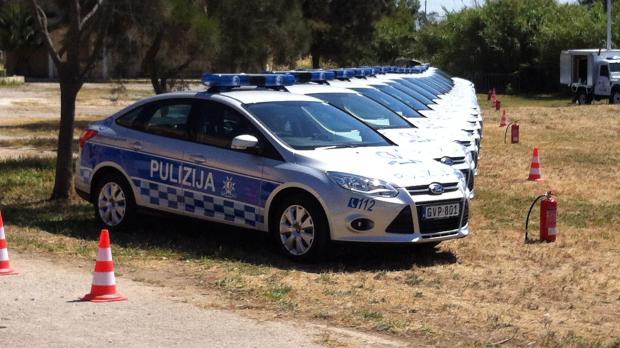
Dr Falzon welcomed the purchase of new cars for the police but urged the minister to act over three police vehicles which had failed the VRT but were still on the roads.
The Labour MP said the Police Force was not only about image. A soul searching exercise was needed because there was no feeling of belonging and there were many complaints over mixed up priorities.
One questioned how people were removed from sensitive posts to be moved to posts of secondary importance. Indeed, Dr Falzon said, he wanted to complain about how replies were given to parliamentary questions on staff levels of the various units.
Dr Falzon also complained about poor police radios and the poor state of the Dog Section, which did not have a single 'general purpose' dog and many dogs were sick. Had the Pope not visited Malta, the country would not have a dog able to sniff out explosives, he said.
Dr Falzon questioned the equal height requirements for male and female recruits and the fact that the same physical tests were being made. This, he said, could be discriminatory against women. He also questioned why having tattoos automatically excluded recruits, however good they were.
In his address Dr Falzon criticised the long time it was taking for the new Police Academy to be built, joking about the fact that even the foundation stone had to be removed and stored in a garage, where it went momentarily missing before being re-laid.
THE SAG - Lacking training, equipment
Dr Falzon said the Special Assignment Group was in disarray. A weapons training officer was lacking and training was seriously lacking. There was a lack of direction in this section and equipment was also lacking.
PACEVILLE
Dr Falzon said there was no control in Paceville. The police were ineffective, with the district police not finding the necessary support. There were even instances were there wasn't a single policewoman on the scene, despite the obvious need. And the Dog Section was deployed there without drug sniffer dogs. Many policemen viewed deployment to Paceville, or Hamrun, as a punishment. Not only did police numbers need to grow, but there needed to be a mix of policemen and police women and a mix of uniformed and plain clothes officers.
DNA MACHINE - New facility unsuitable for analysis
Dr Falzon said it was good that the police had new DNA equipment, but this was basically a database and not an analysis and profiling facility. And it would be worthwhile for the minister to check the people's output there. As for the finger-prints equipment, it seemed that the police did not know how to operate it. And while there were five scene of the crime groups, there were only four cameras to go around.
DRONE
Dr Falzon said it was insulting that CABS had flown a drone over Malta without police permits. What had the police done about it. He hoped this was not a case of bootlicking for foreigners.
TRADE UNION RIGHTS
Dr Falzon described the government's attitude to calls for trade union rights to the police as 'a circus' saying positions had shifted and the police had not been given any rights to date. If the Malta Police Association was to be turned into a trade union, its structure would probably need to be changed. The PL was in favour of union rights for the members of the uniformed services, with limits on the right to strike.
MIGRATION - More could have been done
Dr Falzon said there was convergence between the government and the opposition in this area, but clearly more could be done. Malta had no control on whether flows increased or not, but it was worrying that migrants were able to land undetected.
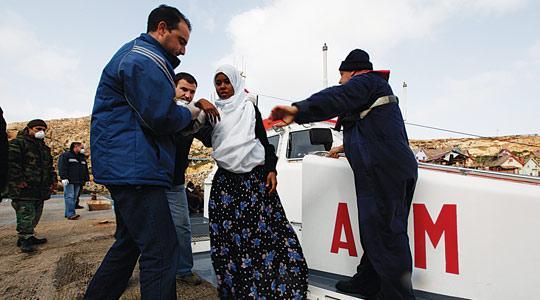
He was also concerned about the poor working conditions of workers in the Detention Service.
It was good that Malta put migration on the EU agenda but results were not satisfactory, with the US taking more refugees from Malta than the EU. So much for voluntary burden-sharing.
It was good that there was some progress in the conditions in Detention Centres, although more could have been done in the lull in migrant arrivals. The police should also be better trained and prepared to deal with riots.
THE PRISONS - 'Chaos as usual'
Dr Falzon said the prisons were a situation of 'chaos as usual' and this could certainly not be called a correctional facility. Members of staff were seriously overworked, with some working for over 80 hours. The management structure was inadequate. Regular thefts were taking place from the stores and there were over-pricing abuses at the tuck shop, without action being taken. The financial allocation for training and rehabilitation of 600 prisoners was €40,000 while €20,000 were paid for a part-time consultant at the prison.
Dr Falzon said the SATU facility as still closed, while long-sought reforms in YOURS, which should have been moved from Corradino, had not taken place.
Dr Falzon reiterated his claim that there isn't a single sniffer dog at the prison. What there were, he said, were untrained dogs cared for by a prisoner.
The drugs situation at the prisons was continuing to persist, Dr Falzon said, with the courts having confirmed cases of drug trafficking. There had even been cultivation of drugs at the prisons. Yet a person found guilty of drugs trafficking in prison was now enjoying privileges to roam in the prisons. Midnight Express was just Looney Tunes compared to the situation in Corradino.
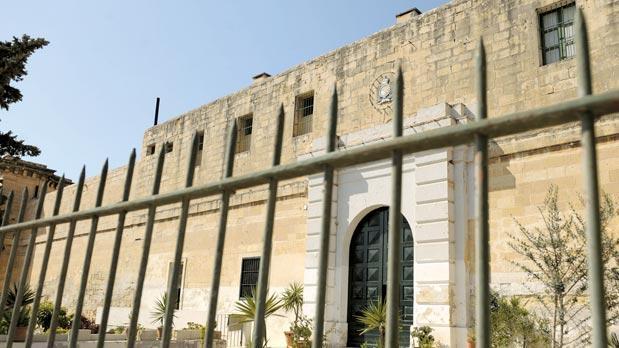
The drugs situation, he said, had also 'exploded' in the female section.
And despite what the minister may be told, random urine testing had not taken place for a long time, except in cases of prison leave.
He said that Division Six - considered as being the punishment division - was being used as an induction area for new prisoners, and one such new arrival was badly beaten up there in March and needed hospital treatment.
Dr Falzon said prisoners were still making calls on their mobile phones from prison - he received such calls and told the callers not to abuse.
Prisoner classification, he said, was still not taking place.
REPARATIVE JUSTICE
Dr Falzon said the Reparative Justice Law should not be seen as a magic solution to reduce prison overcrowding. The law, he said, came into force last January but it was still not being effectively implemented because the necessary structures were not in place. The minister had said the first prisoners may qualify for parole in September or October. He hoped, Dr Falzon said, that prisoners would not end up filing court cases because they were entitled to parole and it was not granted to them because of inadequate structures. However the prisoners themselves should be mentally prepared for parole.
What had become of victim mediation and compensation? What could be a good concept should not be defeated by a lack of preparedness and the absence of support structures, Dr Falzon said.
Dr Falzon also called for progress in other sectors of reparative justice, including community work.
OBJECTION TO MOTION AMENDMENT
Concluding, Dr Falzon moved an amendment to the motion calling for the resignation of the minister.
Foreign Minister Tonio Borg objected, saying this amendment was unacceptable according to Erskine May (the 'bible' of parliamentary procedure) since it changed the nature of the motion from a reprimand to resignation.
Anglu Farrugia (PL) said the mover of the motion had a right to amend it.
Franco Debono (PN) said parliament had over the past few months been run in a shameful way by Dr Borg and the prime minister who was sitting besides him...Acting Speaker Censu Galea called Mr Debono to order and asked him to speak only on the subject matter.
Dr Debono said democracy was being ridiculed. Dr Falzon had been kind in his speech in view of the gross mismanagement of Dr Mifsud Bonnici's mismanagement.
He said he was discriminated by the House Business Committee in not having brought up for debate his own motion, moved in November. The prisons and so many other sectors had been allowed to sink. In any normal parliament where people were decent and respected the honour of their office, no difference was made between censure and a call for resignation since a motion of censure was bad enough...
Mr Galea again called on Dr Debono to concentrate on the point at issue.
Dr Debono said he was speaking about the substance of the amendment.
Mr Galea said he would not accept further comment.
Dr Debono shouted his protests, claiming the Chair was protecting the government, something which Mr Galea denied.
Mr Galea said he would give a ruling in another sitting on whether the amendment could be moved.