No such thing as a safe tan
Summer may be in the air but a suntan, wrongly perceived as a symbol of attractiveness and health, should be the last thing on anyone’s mind. European Melanoma Day on May 7 aims to create awareness about the deadly skin cancer essentially brought about...
Summer may be in the air but a suntan, wrongly perceived as a symbol of attractiveness and health, should be the last thing on anyone’s mind.
European Melanoma Day on May 7 aims to create awareness about the deadly skin cancer essentially brought about by excessive sun exposure.
Six people per year die of melanoma in Malta, according to recent statistics. Over the last two decades, 560 cases of invasive malignant melanoma were diagnosed in Malta, with the rate being slightly higher in females. The mortality rate is at 18 per cent.
“In truth it should be melanoma day 365 days a year,” Joseph Pace, Maltese Association of Dermatology and Venereology president, said.
Recent studies reveal there are genetically determined risk factors for melanoma such as a fair complexion, numerous moles and a family history of melanoma, particularly the presence of gene CDKN2A.
However, the main culprit is the sun – or rather people’s attitude to it. A suntan does not reflect good health and according to Dr Pace it is merely a sign of UV damage.
Rates of melanoma have been increasing around the world in direct proportion to the increase in the popularity of outdoor activities and sunbathing. The World Health Organisation records about 48,000 melanoma-related deaths worldwide per year.
Melanoma invades the skin and can spread to other organs in the body, often with fatal consequences. Surgical removal of a melanoma caught at an early stage leads to a survival rate of 90 per cent.
“However the chances of survival once a melanoma has spread beyond the skin are dismal,” Lawrence Scerri, Department of Dermatology and Venereology chairman, said. Catching melanoma early significantly increased chances of cure, he said.
The melanoma awareness campaign is in its 13th year. How effective are the campaigns?
“It’s very difficult to say: we are now seeing the results of people who stayed in the sun 20 years ago,” he said, adding they would only know if the campaigns were working if in 20 years time the mortality rate from melanoma went down.
Dr Scerri also highlighted the strong link between episodes of sunburn in childhood and the subsequent development of melanoma.
The campaign urges the public to apply sunscreen. “Sunscreen alone does not prevent skin cancer – no product can give total protection,” Michael Boffa, a consultant at the department, said.
The aim of the campaign is to raise public awareness, promote early detection and prevention. Health Promotion director Charmaine Gauci urged the public to avoid the sun between 11 a.m. and 4 p.m.; wear light clothes and apply sunscreen every couple of hours when out and about.
The bottom line is that there is no such thing as a safe tan: we have to embrace a happier shade of pale.
Spotting the mole
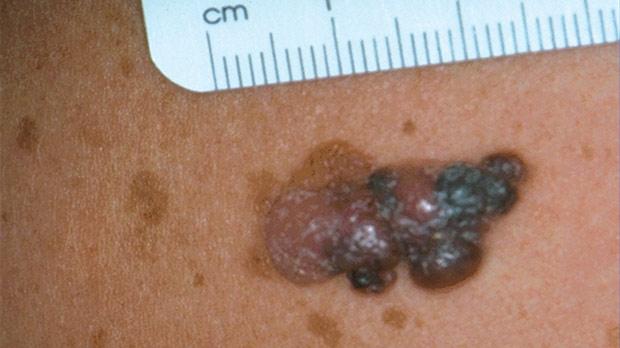
Melanoma usually appears as a brown/black patch or a lump with the following characteristics:
• It has an irregular shape with an irregular rough border.
• It does not have a uniform colour but tends to consist of different shades.
• It is usually larger than six millimetres in diameter.
• It changes in size, shape and colour.
• There is spontaneous bleeding and irritation.
Melanoma Monday
People with changing moles or suspicious pigmented scars are this week urged to call the Dermatology Department at Boffa Hospital, to set up an appointment for melanoma screening on Monday.
Appointments can be set up by calling 22987105 or 22987153 and are on a first come first serve basis.