In the line of fire
Afghan journalist Omaid Khpulwak who was working for the BBC and was mistakenly killed by US forces in late July 2011. Nato has been accused of misleading the public over success in Afghanistan by saying operations involving only its troops are led by...
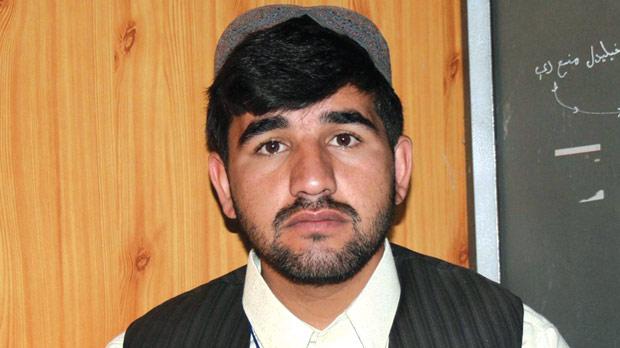 Afghan journalist Omaid Khpulwak who was working for the BBC and was mistakenly killed by US forces in late July 2011.
Nato has been accused of misleading the public over success in Afghanistan by saying operations involving only its troops are led by local forces.
...the international troops are expected to slip more and more into the role of supporting Afghan forces, rather than leading them
The report by a Kabul-based think tank cuts to the heart of a public perception over the battle being waged in Afghanistan.
International commanders are eager to highlight successes by Afghan forces and downplay their own role as Nato cuts the number of troops and hands over security to government control.
The United States and other nations that make up the International Security Assistance Force have already started pulling out troops with the goal of putting Afghans in charge of countrywide security by the end of 2014.
The alliance wants to show that Afghans are up to the task so that the country does not descend into civil strife after 10 years of a Nato-led war against Taliban and Al Qaeda militants.
“ISAF’s desire to present accounts of events as favourably as possible is to be expected but sometimes this slips into propaganda, half-truths and, occasionally, cover-up,” said British analyst Kate Clark, the author of the report by the Afghan Analysts Network.
As the drawdown of foreign forces progresses, the international troops are expected to slip more and more into the role of supporting Afghan forces rather than leading them.
A draft strategic partnership pact agreed by the US and Afghanistan earlier this week said that after 2014, US forces will only fight in Afghanistan with the government’s approval.
In the transition, one phrase – “Afghan-led” – has become increasingly prevalent in Nato and US news releases describing operations. The report alleges that the term has been so loosely applied that it has, in at least one instance, been used for an assault conducted entirely by US troops.
The report entitled Death of an Uruzgan Journalist focuses on the case of Afghan reporter Omaid Khpulwak, who was trapped in a TV and radio broadcasting station known as the RTA building in July 2011.
It was attacked by insurgent suicide bombers as part of a larger onslaught on the southern city of Tarin Kot.
He survived the initial blast but was shot by an American soldier who mistook him for an insurgent.
The investigation also concluded that US troops were the only ones to enter the building and that Afghan forces on the ground did not issue commands to them.
But a Nato news release a day after the attack said: “Afghan commandos and a combined team of Afghan national security forces responded unilaterally to insurgent attacks in Tarin Kot.”
Ms Clark argues in her report that the message put out by the Afghan government and Nato and US forces following the attacks in Uruzgan confused the role of US troops, leading Mr Khpulwak’s family and others in Tarin Kot to suspect an intentional cover-up.
A spokesman for US forces said it was still appropriate to call the Uruzgan response “Afghan-led” because Afghan forces were overseeing the entire response that day, which included defending the governor’s compound and elsewhere in the city.
“Afghan-led is Afghan-led if we’re only providing a level of minimal support and they’re the ones making the decisions to do a particular response,” he said.
Nato and Afghan officials say Afghan forces have made great progress towards acting on their own and the response in the Kabul attacks shows that improvement.