Reviews of classical CDs
Malipiero: Symphonies Nos. 5, 6, 8 and 11. Moscow Symphony Orchestra conducted by Antonio de Almeida – Naxos 8.570880 (74 minutes). Gian Francesco Malipiero is one of a small number of 20th century Italian composers whose musical aspirations were to...
Malipiero: Symphonies Nos. 5, 6, 8 and 11. Moscow Symphony Orchestra conducted by Antonio de Almeida – Naxos 8.570880 (74 minutes).
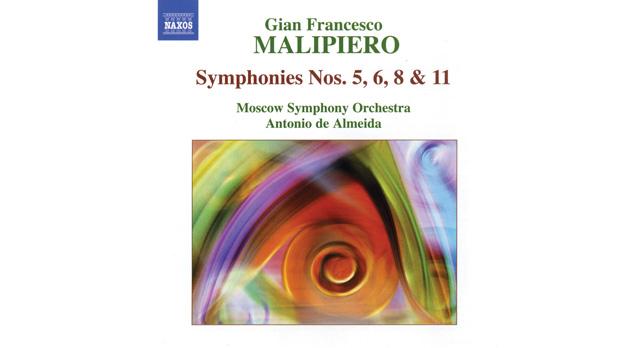
Gian Francesco Malipiero is one of a small number of 20th century Italian composers whose musical aspirations were to create a true symphonic language in a country whose musical art was mainly based on the operatic and sacred genres.
Born in 1883, the young composer was always facing opposition whenever he tried to introduce his ‘progressive’ ideas, although eventually his dream started to take shape.
By the time of his death in 1973 aged 90, the composer had been subjected to almost total neglect outside his native Italy, and to compound the misery, even his own countrymen have done shamefully little to keep his best works, which are many, in circulation. It is only during the last two decades that Malipiero’s stock has started to rise slowly, and the disc under review should be warmly welcomed.
The four symphonies on this issue belong to two very diverse phases in the composer’s exceptionally long career. The Fifth is the most frequently played of the 11 he composed, and being specifically written as an experiment in sound (it is subtitled concertante in eco), the piece is highly adventurous both in its orchestration and harmonic language. The strikingly original Sixth (degli archi) dates, like the Fifth, from 1947, and uses concertante interactions between the full string body and groupings of solo strings.
The Eighth (1964) (symphonia brevis) and the Eleventh (1969) (delle cornamuse – bagpipes) are colourfully scored works, with the latter featuring drone-like ostinati which give it a truly particular sound-world. De Almeida and his Russian forces give penetrating readings and all of Malipiero’s exuberant yet subtle scoring is brought out with absorbing clarity. A fitting tribute to one of Italy’s finest symphonists.
Brian: Violin Concerto; Symphony No. 18; The Jolly Miller Overture. Marat Bisengaliev, violin, the BBC Scottish Symphony Orchestra conducted by Lionel Friend – Naxos 8.557775 (55 minutes).
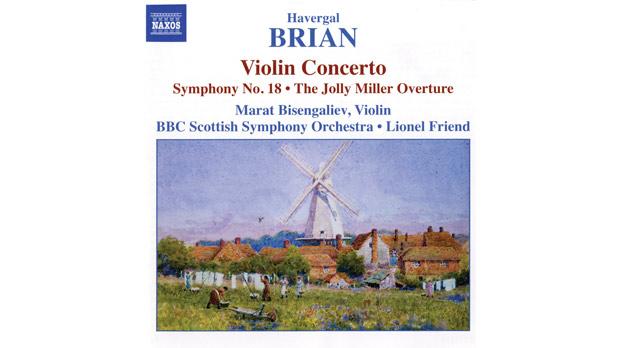
Born in 1876, Havergal Brian is an important British composer. He lived to the ripe old age of 96, and of his 32 symphonies, the last 18 were composed when he was over 80.
Apart from his large symphonic output, Brian also wrote a number of choral works, several choral and solo songs, five operas and a handful of sacred pieces that are hardly ever performed.
Brian’s inspired music has been unjustly neglected, but in the last two decades there has been a resurgence of interest in his work and most of his symphonies and concertos have been recorded.
Arguably one of the finest British violin concertos, the Violin Concerto in C (1934-35) features a heroic bravura part bubbling with memorable tunes often reminiscent of English folklore. The core of the piece is its central passacaglia, a deeply emotional example of the richness of Brian’s imagination.
Symphony No. 18 dates from 1961, and again, one finds Brian in his most approachable mood. The first movement is tight, bright and optimistic, followed by a slow episode, which builds up to a powerful climax, after which a perky final movement jolts the listener back into a sprightly trot, with some darker echoes on the way. The 1962 overture has some delightful touches full of playful fun and breezy joy. An invaluable addition to the Brian discography, superbly performed and presented.
Wagner/Stokowski: Symphonic syntheses from Tristan und Isolde, Parsifal and The Ring. Bournemouth Symphony Orchestra conducted by José Serebrier – Naxos 8.570293 (75 minutes).
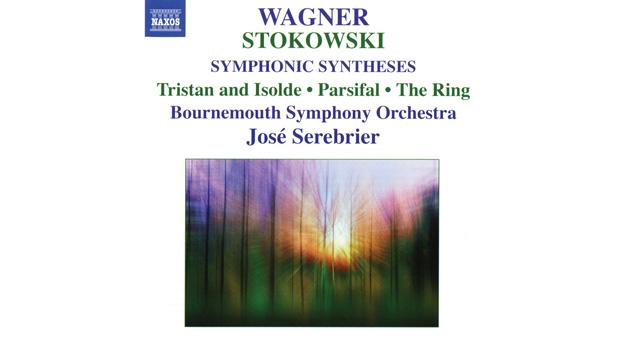
When Leopold Stokowski (1882-1977) began his conducting career, Wagner’s music featured in his first concert, and was to remain close to his heart for the rest of his life.
The longest piece on this recording is a 36-minute arrangement from Tristan und Isolde, a monumental 1865 masterpiece that revolutionised the history of music. Tristan was one of Stokowski’s favourite works, and this is his comment on Wagner’s immense conception:
“All through the three Acts there is the sound of despair and the ecstasy of love, but its supreme expression is in the garden scene in Act II and finale (the famous Liebestod).
Wagner created a new style, a new technique, new harmonic sequences, new combinations of timbre and a new orchestral palette. ning of Act II.
This is love music that has overpowering eloquence when words cannot continue and life cannot further express.”
In spite of his unflinching admiration for Wagner, Stokowski conducted only one of his operas in its entirety, a concert performance of Parsifal during Easter 1933.
That experience spurred him to make the transcription we find on this recording, which includes music we find in Act III, from the transformation scene at the end and the very final moments when Parsifal heals Amfortas’s wound by touching it with his spear. Stokowski excluded the ‘Good Friday music’ because Wagner had already arranged a concert version of it.
The rest of the programme is made up of three symphonic fragments from The Ring. For these particular excerpts Stokowski enhanced existing published scores with his own special brand of magic, giving “The Entrance of the Gods into Valhalla” (Das Rheingold) and “Wotan’s Farewell” and “The Ride of the Valkyries” (Die Walküre) a more emphatic sweep to this already mesmerizing orchestral miracle.
In these impressive performances, José Serebrier and his Bournemouth forces manage to inject these ‘tone poems’ with an orchestral brilliance and sumptuousness of sound that is gripping throughout, and for those who love this evocative music gloriously played, this Wagnerian recipe will certainly ravish the ear. Exemplary sound quality and informative annotations complete a sound spectacular that will sweep you off your feet.
These CDs were made available for review by D’Amato Record Shop of 98/99 St John Street, Valletta.