World marks Dickens bicentenary
Among the jubilees, centennials and other landmark anniversaries in 2012, several events around the world are today marking the 200th anniversary of the birth of Charles Dickens, acclaimed as one of the finest writers of the English language and one...
Among the jubilees, centennials and other landmark anniversaries in 2012, several events around the world are today marking the 200th anniversary of the birth of Charles Dickens, acclaimed as one of the finest writers of the English language and one whose novels have become enduring classics.
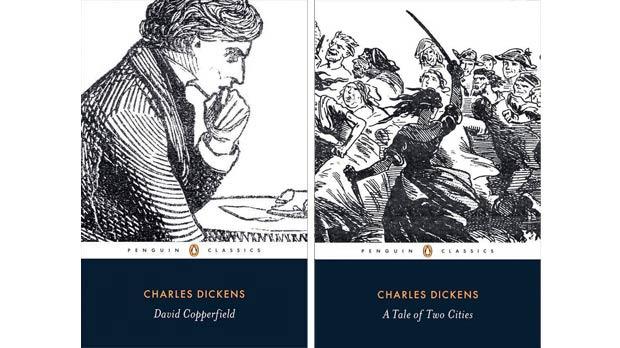
Dickens’ novels were informed by his own early experiences, from the happy days he spent in Kent as a boy... to the childhood of poverty
The Dickens 2012 Bicentenary plans include an extensive series of events to celebrate the life and work of the iconic Victorian author today. Events include a retrospective of films adapting Dickens’s works and theatrical productions, such as Nicholas Nickleby and David Copperfield.
A new filmed version of his classic book Great Expectations will be released starring Ralph Fiennes, Helena Bonham Carter and Robbie Coltrane, all from the Harry Potter franchise, in the classic story of an orphan who suddenly becomes a gentleman with a mysterious gift from an unknown benefactor.
Exhibitions feature at the Museum of London, such as Dickens on Film, which will make a stop at New York’s Museum of Modern Art.
Other exhibits include Zurich’s Museum Strauhof in Switzerland, which is dedicating an exhibition to Dickens’s life and work; the Morgan Library and Museum in New York City displays focusing on the author’s manuscripts; and a heritage tour scheduled at the Château D’Hardelot in Pas-de-Calais, France. Britain is marking the bicentenary with a street party in the road where he was born in Portsmouth on February 7, 1812.
Prince Charles, the heir to the throne, and actor Ralph Fiennes will be among guests at the laying of a wreath at his grave in Poets’ Corner, Westminster Abbey, London. Claire Romalin, a leading biographer of the author, says there is no one to compare with Dickens today. “He had extraordinary energy and he was extraordinarily hard-working. His first three novels – The Pickwick Papers, Oliver Twist and Nicholas Nickleby – came out in monthly instalments,” she said.
“When he was halfway through The Pickwick Papers he started writing Oliver Twist, so each month he was writing two instalments of quite different novels.
“Can you imagine doing that now?”
Dickens’ novels were informed by his own early experiences, from the happy days he spent in Kent as a boy, before his father was thrown into the debtors’ prison, to the childhood of poverty into which he was then thrust.
At a tender age, Dickens was forced to work in a blacking factory, attaching labels to bottles of polish, which inspired one of his best-known works, David Copperfield, first published as a novel in 1850.
Later, despite only intermittent schooling, Dickens found work as an office boy in a law firm. He was 15.
“The most extraordinary thing about his life is that nine years later he was famous as the author of The Pickwick Papers,” said Ms Tomalin. “He did it by learning shorthand, by becoming a law reporter, a parliamentary rep-orter and a newspaper reporter.
“He was a writer of genius. After Shakespeare he was the greatest inventor of character.”
Dickens had a less-publicised life helping to run and to finance a house for “fallen women”, offering prostitutes a new start away from their old lives in a large house in London. This most Victorian of callings occupied years of his life, yet he still found time to father 10 children and maintain a prodigious output of books, articles and give numerous lectures.
Unlike many of the great writers and artists, Dickens was a star in his own time. Ms Tomalin says that was because he gave readers what they wanted.
“He wanted to show that ordinary people were as interesting as rich, famous, grand people,” she noted. “He succeeded in that. He was really funny, he made people laugh.
“And he also wanted people to cry and he did that with pathos and by writing thrilling plots.” Penguin Books has packaged a special box-set collection of six editions of Dickens classics, featuring Great Expectations, Hard Times, Oliver Twist, A Christmas Carol, Bleak House, and A Tale of Two Cities.
www.dickens2012.org
From worker in a blacking factory to a novelist considered the greatest of the Victorian era
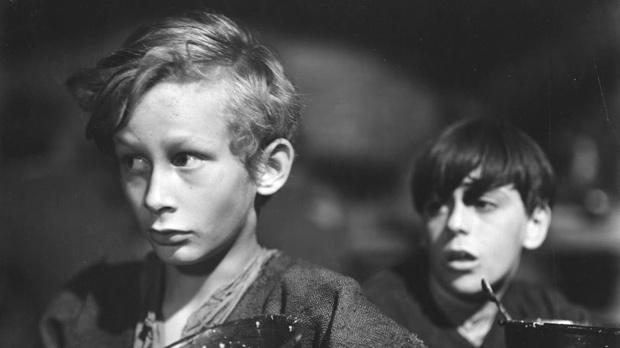 John Howard Davies as Oliver Twist in a 1948 adaptation of the classic novel, also starring Alec Guinness as Fagin. This is one of the films on show at the BFI Southbank in London as part of a retrospective exhibition on the author.
• Charles John Huffam Dickens was born in Landport, Hampshire, during the new industrial age.
• The son of a naval clerk, Dickens spent his early childhood in London and in Chatham. When he was 12 his father was imprisoned for debt, and Charles was compelled to work in a blacking warehouse.
• At 17 he was a court stenographer, and later he was an expert parliamentary reporter for the Morning Chronicle.
• His sketches, mostly of London life (signed Boz), began appearing in periodicals in 1833, and the collection Sketches by Boz (1836) was a success.
• Soon Dickens was commissioned to write burlesque sporting sketches; the result was The Posthumous Papers of the Pickwick Club (1836–37), which promptly made Dickens and his characters, especially Sam Weller and Mr Pickwick, famous.
• In 1836 he married Catherine Hogarth, who was to bear him 10 children; the marriage was never happy.
• The early-won fame never deserted Dickens. His readers were eager and ever more numerous, and Dickens worked vigorously for them, producing novels that appeared first in monthly instalments and then were made into books. Oliver Twist (in book form, 1838) was followed by Nicholas Nickleby (1839) and by two works originally intended to start a series called Master Humphrey’s Clock: The Old Curiosity Shop (1841) and Barnaby Rudge (1841).
• When he visited America in 1842, he was received with ovations but awakened some displeasure by his remarks on copyright protection and his approval of the abolition of slavery. He replied with sharp criticism of America in American Notes (1842) and the novel Martin Chuzzlewit (1843).
• Dickens lived in Italy in 1844 and in Switzerland in 1846.
• In 1856 he bought his long-desired country home at Gadshill. Two years later, because of his attentions to actress Ellen Ternan, his wife ended their marriage by formal separation.
• Dickens was working furiously, editing and contributing to the magazines Household Words (1850–59) and All the Year Round (1858–70) and managing amateur theatricals. To these labours he added platform readings from his own works; three tours in the British Isles (1858, 1861–65, 1866–67) were followed by one in America (1867–68).
• When he undertook another English tour of readings (1869–70), his health broke, and he died soon afterward, leaving his last novel, The Mystery of Edwin Drood, unfinished.