One of ours
The law is tested when it is personal, says Michela Spiteri
October 1993. From every corner of the Maltese islands we arrived at the gates of the University of Malta, poised between who we were and what we might become.
In ones and twos, we were strangers at first, unaware of the faces that would become the constants of our days: the keepers of seats at eight o’clock lectures, lenders of notes, kindred spirits all facing the same examinations. The lecture halls (Alt, LT1 and 2) gradually became more intimate, the blur of faces more distinct; and yet, for all the common experience, we began to wonder what our separate futures might be.
We of course had no real idea. It was difficult to imagine the person sitting next to you shaping the country’s public life. Yet many of us did just that. The graduating course of ’99 produced magistrates and judges, parliamentarians and public figures: Gabriella Vella, Claire Zammit Stafrace, Noel Bartolo, Rachel Montebello and Neville Camilleri all went on to serve as magistrates, with Rachel and Neville later elevated to judges; while Stefan Zrinzo Azzopardi, Edward Zammit Lewis, Chris Cardona and Franco Debono carried their advocacy into parliament.
We remember them all: the note-takers, the high-fliers, the generous and the easy-going. Many of us can still picture Rachel Montebello writing assiduously with her left hand, page after page, her notes an unofficial lifeline before the ordeal of examination. And then the others whose talents extended well beyond the faculty: how could one ever forget Antonio Tufigno whose wit and poetry filled Sir Temi Zammit Hall with laughter. Yes, we were a mixed lot – individuals certainly, but with a common denominator of anxiety, laughter, and that quiet solidarity you find when young people share something demanding and, facing it, speak for their generation.
And then there was Elisa Falzon. Even at 19, she stood out: not loudly, but unmistakably. There was her seriousness of purpose for one, her diligence and leaving nothing to chance. While some of us – myself included – strategically abandoned entire chapters in the faint hope they would not surface in an exam, Elisa studied everything. Not just the main text, but every footnote, with a thoroughness and precision that few of us could match. It will come as no surprise that she went on to become one of Malta’s most respected notaries, scrupulous to the last clause and unwilling to pass over a single detail. And such perfection, in her case, was not ‘aspirational’ but something wholly natural. Her conscientiousness as a student defined her as a professional.
And yet none of us in those early years, as we wrestled with damages and torts, could have imagined that one of our own would later confront, so personally and so tragically, those very principles once debated across wooden desks.
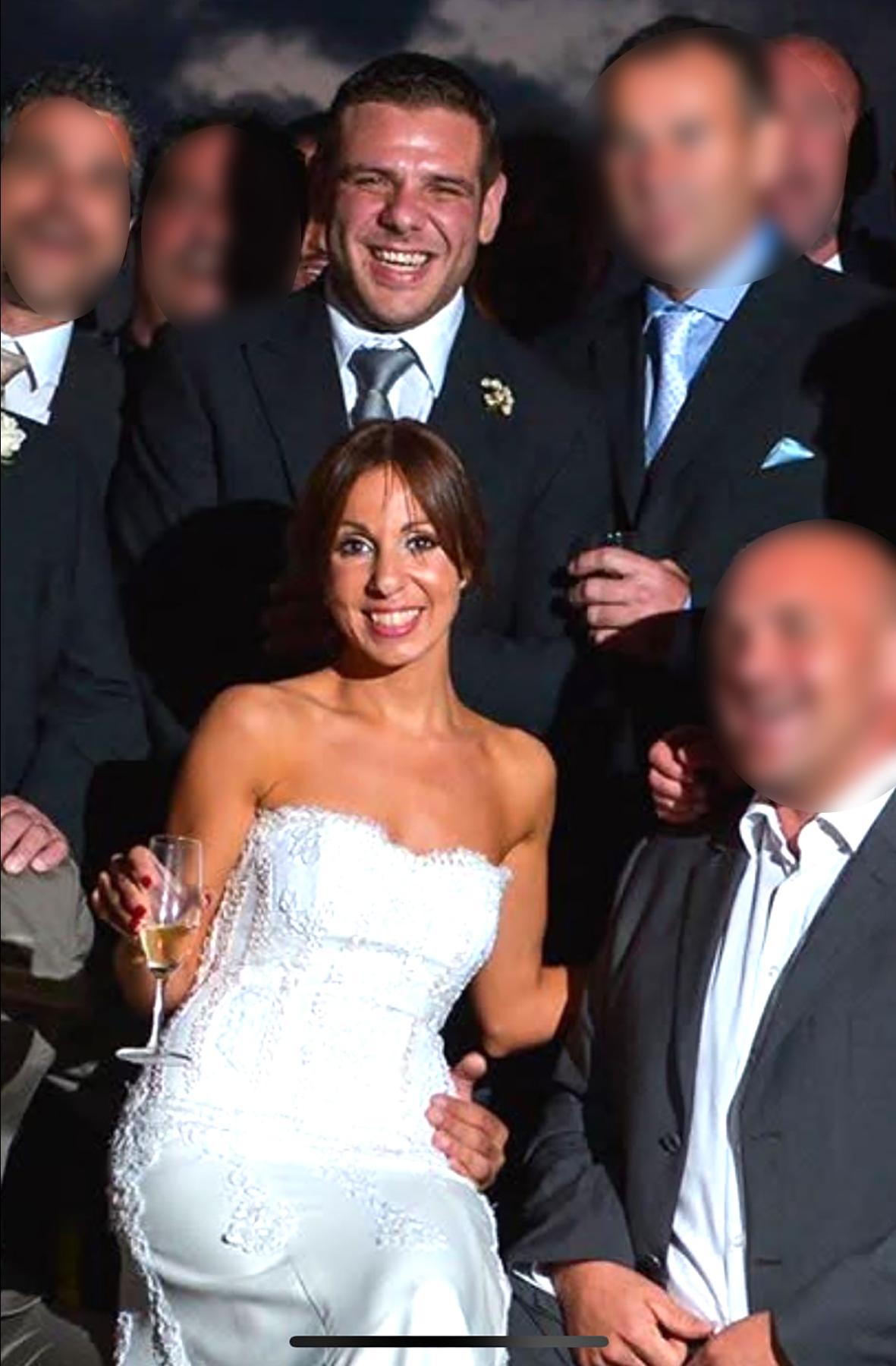 Elisa Falzon and her husband on their wedding day.
In 2024, Elisa’s life changed irrevocably. She lost her arm, and very nearly her life, in circumstances so appalling that even recalling them seems unreal. I will not go into the merits of the case – Eliza would not want that. She could have pursued the headlines but didn’t. But I will say that I visited her in hospital and heard her account first-hand: the physical and mental traumas she endured in those hours, days, and months. The medical interventions were extensive. Survival itself was uncertain.
I must pay tribute here to Kathleen Zarb Adami, one of us from the Course of ’93. She was the first to go to the emergency department at Mater Dei and after that was by Elisa’s side in a way that goes far beyond “let me know if you need anything.” She followed through, quietly, steadfastly, doing the work that mattered most. Kathleen’s loyalty and dedication became a lifeline, a steady presence in ever-shifting circumstances.
We, who were strangers in 1993 became colleagues and friends- Michela Spiteri
Elisa’s home bore the scars of what had happened. I saw the pictures. This was not theatre or a film set. It was stark reality. Months of hospitalisation, multiple surgeries, complications and rehabilitation followed. If something as minor as a stiff neck or a bout of tennis elbow can alter one’s sense of autonomy and diminish quality of life, then what of losing a limb? For a long while, Elisa had no function in her remaining arm. She had to fight to rebuild, not just recover, the basic movements that most of us take for granted.
I remember seeing Elisa in a wheelchair late one night in hospital looking desolate and defeated (I was accompanying my mother for an MRI). It was a chance and shocking encounter. My heart broke for her and in that moment I felt she was giving up the fight.
One minute you’re swimming, exercising, pumping iron, shopping for strapless dresses, living independently: the next, you wake up after hours – days – of surgery, without an arm, still in recovery, facing a different reality, and still not out of the woods. You may learn how to put on contact lenses with one hand, how to dress, even how to butter a piece of toast. Pulling your hair into a ponytail is no longer an option.
But what of the mind? If the able-bodied can struggle with mental health, what about those trying to recover functional independence from the ground up? It is tragic enough when such terrible harm befalls anyone simply living a blameless life; but when that person is as conscientious and as kind as Elisa, a person who acted with care and responsibility, and relied on assurances given by those entrusted with the welfare and safe rehoming of animals, the tragedy is complete.
The determination and attention to detail that saw her through six demanding years of study and built her professional reputation, became the powerful tools with which she now rebuilds her life – a task she addresses unassumingly and without histrionics. But I cannot pretend she is fine: no one emerges unchanged from such injuries: you don’t go back to the person you were. And there are things she will never again be able to do.
Knowing Elisa like I do, she will not allow what has happened to define her. She rejects bitterness and searches for reasons to be optimistic and altruistic.
We, who were strangers in 1993 became colleagues and friends. As professionals, we have upheld the law, interpreted it, and, like everyone else, have relied on it for protection. Today, one of us stands in particular need of protection. It is my hope – my firm belief – that due legal process will not fail Elisa.
I’m not being sanctimonious here. I’m simply affirming that the principles we studied and debated all those years ago – and upon which we built our subsequent lives – demand nothing less.